Intersections: Main and Secondary Roads
Step 2 of the method, Sign, splits the traffic into two groups, and the whole order follows from that split. Find the main road first, because it switches off the right-hand rule between the two groups.
How do I know which road is main?
Section titled “How do I know which road is main?”Three signs tell you, and step 1 hands over to them when the traffic light is off or flashing yellow.
| Sign | Name | What it means for you |
|---|---|---|
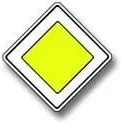 |
2.1 “Main road” | You are on the main road. |
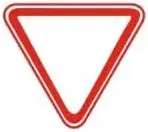 |
2.4 “Give way” | You are on the secondary road. Give way to traffic on the crossing road. |
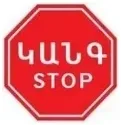 |
2.5 “Movement without stopping prohibited” | You are on the secondary road. Stop, then give way. |
Pictures show the signs other drivers see, too. A dark diamond is the back of sign 2.1, so that driver is on the main road.
The road surface can also decide. A road with a hard surface, such as asphalt concrete or cement concrete, is the main road in relation to an earth road (point 3). A short surfaced stretch just before the intersection doesn’t change that: the earth road stays secondary.
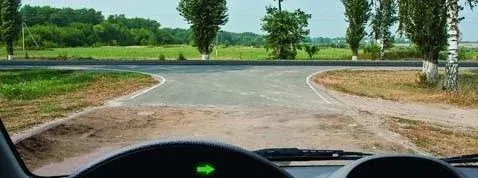
If you can’t tell whether there is a surface, because of darkness, mud or snow, and there are no priority signs, consider yourself on a secondary road (point 101). That is the safe guess.
Who goes first?
Section titled “Who goes first?”Point 96: a driver on the secondary road gives way to vehicles on the main road, whatever direction they then take. Going straight gives you no advantage over a main-road car that is turning.
The right-hand rule doesn’t apply between the two groups, because it belongs to equal roads.
Common trap: A truck comes out of an earth road on your right, and you are on the asphalt. You don’t give way: it does. “It came from the right” only works on equal roads.
How do I sort each group?
Section titled “How do I sort each group?”Run steps 3 to 5 inside each group, as if the group were on equal roads.
On the main road, the left-turn rule still applies. If you turn left or make a U-turn on the main road, you give way to oncoming vehicles going straight or turning right. A secondary-road car on your right gives way to you. Being on the main road doesn’t excuse you from an oncoming vehicle.
On the secondary road, point 97 makes drivers treat each other by the rules for equal roads. Give way to the right, and give way to oncoming traffic when you turn left. If you make a U-turn from a road with sign 2.4, you give way to the main road and to the oncoming vehicle as well.
Trams follow the same split. A tram on the main road goes first. A tram on the secondary road gives way to the main road, but still goes before a car on the secondary road.
Does giving way mean stopping?
Section titled “Does giving way mean stopping?”Not always. Giving way means not forcing the driver with priority to change speed or direction. Say you are at sign 2.4, turning right onto a one-way road, and a truck is passing in its left lane. Your turn takes you into the right-hand lane, so you may turn at the same time, if you don’t obstruct it.
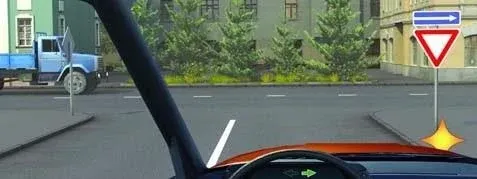
Remember: “Only after the truck has passed” is stricter than the Rules. The test is whether you obstruct it.
What if there is a white plate under the sign?
Section titled “What if there is a white plate under the sign?”Plate 8.13 “Direction of the main road” means the main road bends at this intersection. Everyone on the secondary road still waits for everyone on the main road. The next lesson shows how to read the plate.
Try it yourself
Section titled “Try it yourself”Four cars meet at the signs shown. Red and blue are on the main road, and yellow and green see sign 2.4. Red turns right, blue turns left, yellow goes straight and green turns left.
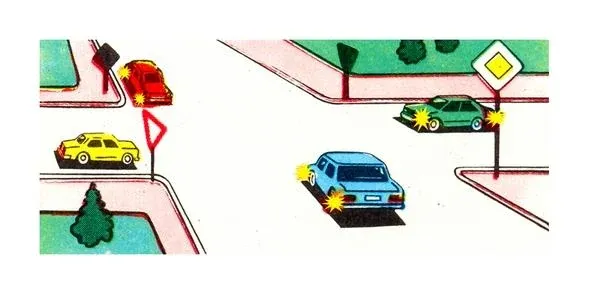
Who crosses third? The yellow car. Sign: red and blue go before yellow and green. Left: inside the main group, blue turns left and waits for red, so red goes first and blue second. Left again: inside the secondary group, green turns left and waits for yellow. Yellow is third and green is last.
You are on the main road, turning left. A truck comes towards you and a white car waits on the right.
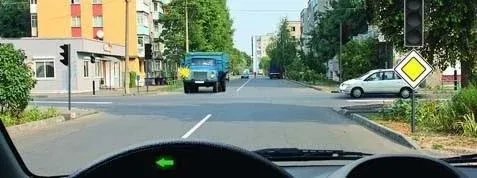
Who do you give way to? The truck only. Sign: the white car is on a secondary road, so it waits for you. Left: the truck is oncoming on your own main road, and you turn across it.
You are going straight, and the light flashes yellow. You see sign 2.1. A tram comes from the left and a truck from the right.
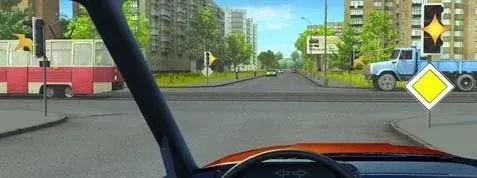
Who goes first? You. Light: flashing yellow doesn’t count. Sign: you are on the main road, so both give way to you. The tram gets no priority here, because that belongs to equal roads.
Key points
Section titled “Key points”- Sign 2.1 puts you on the main road. Signs 2.4 and 2.5 put you on the secondary road.
- A hard surface is main over earth. A short surfaced stretch doesn’t change that.
- Can’t see the surface and no signs? Consider yourself on a secondary road.
- The secondary road waits for the main road, whatever direction anyone takes.
- The right-hand rule doesn’t apply between main and secondary roads.
- Inside each group, use Rail, Right and Left.
- Giving way means not obstructing, so you may sometimes go at the same time.
Practice questions
Section titled “Practice questions”Question 189. Coming out from a road with an earth surface onto a road having an asphalt-concrete surface
- We must consider it the major road
- We consider that road equal to ours
Show answer
Correct: 1. We must consider it the major road
Under point 3 of the Traffic Rules a road with a hard surface - asphalt concrete, cement concrete and the like - is the MAIN road in relation to one with an earth surface. In the picture you are on the earth-surfaced road and are coming out onto the asphalt-concrete road that crosses it, so you must consider that road the major one and give way to the vehicles travelling along it. “We consider that road equal to ours” is wrong, and a surfaced apron laid just before the junction does not make the earth road equal to it - what counts is the surface of the road itself.
Question 258. The vehicles will pass the intersection in the following order.
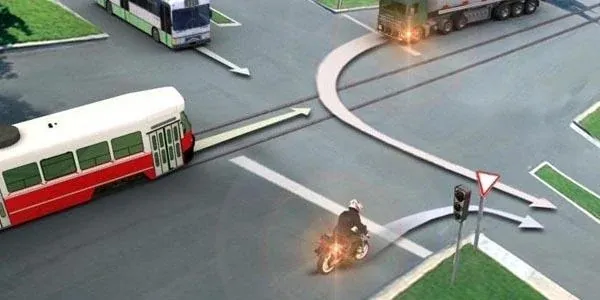
- The tram, the bus, the truck, the motorcycle.
- The bus, the truck, the tram, the motorcycle.
- The bus, the tram and the motorcycle, the truck.
Show answer
Correct: 3. The bus, the tram and the motorcycle, the truck.
The traffic light is off, so the signs decide the order. The bus is on the main road, so it goes first. The tram and the motorcycle are behind sign 2.4 “Give way” and wait for the bus. Their paths do not cross each other, so after the bus they go together. The truck is turning left, and its path crosses both the tram’s and the motorcycle’s, so it goes last. The order is the bus, then the tram and the motorcycle, then the truck. “The tram, the bus, the truck, the motorcycle.” and “The bus, the truck, the tram, the motorcycle.” are therefore wrong.
Question 308. The second to pass the intersection will be:
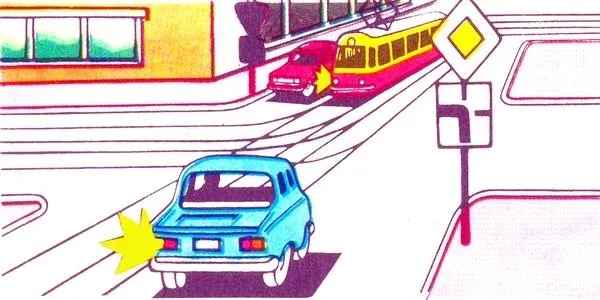
- The tram.
- The red car.
- The blue car.
Show answer
Correct: 1. The tram.
The sign on the right is 2.1 “Main road”, which establishes that the blue car’s road is the main one. The blue car turns left along the main road, while the tram and the red car are both on the secondary road. Under point 96 a driver on the secondary road must give way to vehicles travelling on the main road, so the blue car goes first. Between the tram and the red car, which are on the same secondary road, point 96 gives the tram priority over non-rail vehicles whatever direction it is going in, so the tram passes second and the red car last. “The red car.” is wrong because the tram outranks it, and “The blue car.” is wrong because it is on the main road and goes first, not second.
Question 310. The intersection will be crossed second by:
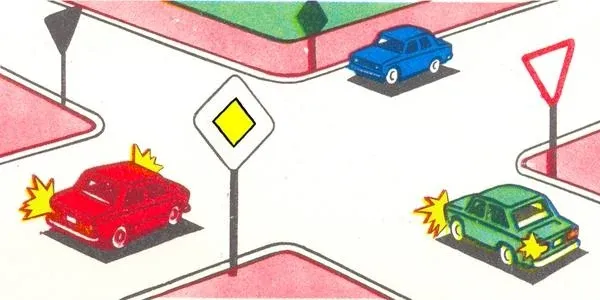
- The green car.
- The red car.
- The blue car.
Show answer
Correct: 2. The red car.
The yellow sign 2.1 “Main road” marks the road of the blue and red cars, while the green car faces sign 2.4 “Give way” and is on the minor road, so under point 96 it gives way to all traffic on the main road and passes last. On the main road the blue car goes straight and the red car turns, so under point 99 the red car gives way to the oncoming blue car going straight. The blue car therefore passes first and the red car second. “The green car” is wrong (it is on the minor road and passes last), and “The blue car” is wrong (it passes first).
Question 312. The intersection will be crossed second by:
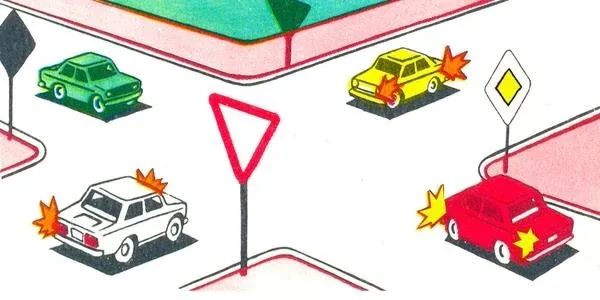
- The white car, simultaneously with the yellow one.
- The red car.
- The green car.
Show answer
Correct: 2. The red car.
The green and red cars are on the main road - sign 2.1 “Main road” faces the red car, and the dark diamond at the left edge is the reverse of the same sign for the green one - while the white and yellow cars see sign 2.4 “Give way” and under point 96 must yield to everything travelling on the main road. The red car’s left indicator is on and the oncoming green car is going straight, so under point 99 the red car gives way to it and crosses the intersection second. “The green car.” is wrong because it travels straight along the main road and goes first. “The white car, simultaneously with the yellow one.” is wrong because those two both turn left from the secondary road and go together, but only third, after the two on the main road.
Question 313. The intersection will be crossed last by:
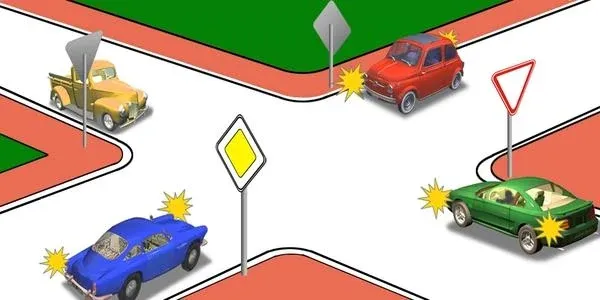
- The blue car.
- The yellow car.
- The green car.
- The red car.
Show answer
Correct: 3. The green car.
Sign 2.1 “Main road” stands on the blue car’s approach and sign 2.4 “Give way” on the green car’s, so the blue and the red cars are travelling on the main road while the green and the yellow cars are on the secondary one. Under the Rules a driver approaching on the secondary road gives way to everyone travelling on the main road, so the green car goes after the blue and the red. Its lit indicator shows a left turn, and a driver turning left gives way to the yellow car coming from the opposite direction going straight ahead - so it goes after that one as well, which makes it last. “The blue car.” and “The red car.” are wrong because both are on the main road, and “The yellow car.” is wrong because it keeps its advantage over the green car in any case.
Question 315. The intersection will be crossed first by:
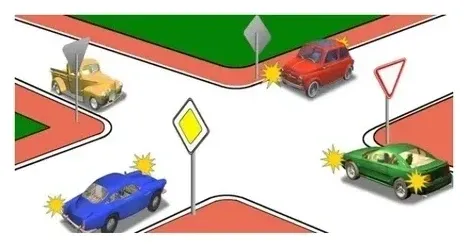
- The green car.
- The blue car.
- The red car.
- The yellow car.
Show answer
Correct: 3. The red car.
The blue and red cars are on the main road (sign 2.1 “Main road” faces the blue car), while the green and yellow drivers enter from secondary roads and under point 96 of the Traffic Rules must give way to both of them. The order between the main-road cars is set by point 99: the blue car’s left turn indicator is on, and when turning left it must give way to the oncoming red car. Therefore the red car crosses the intersection first, followed by the blue car and only then the vehicles from the secondary roads.
Question 319. Which car will cross the intersection last?
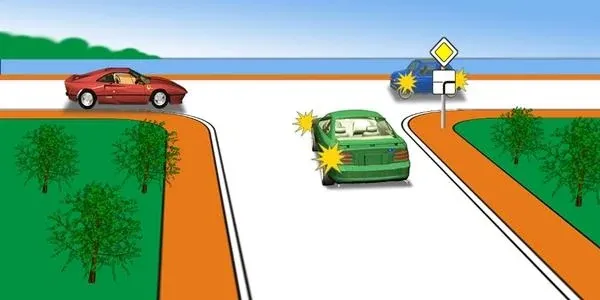
- The blue one.
- The red one.
- The green one.
Show answer
Correct: 2. The red one.
The sign on the right is 2.1 “Main road”, which establishes that the green and blue cars’ road is the main one. Both of them are on the main road and both are turning left, while the red car is travelling straight along the secondary road. Under point 96 a driver approaching the intersection on a secondary road must give way to the vehicles travelling on the main road REGARDLESS of the direction they then take - so going straight on gives the red car no advantage over two cars that are turning. The red car therefore yields to both and crosses the intersection last. “The blue one.” and “The green one.” are wrong because both are on the main road and pass before the red one.
Question 324. The intersection will be crossed third by:
- The blue car.
- The yellow car.
- The green car.
- The red car.
Show answer
Correct: 2. The yellow car.
The red and blue cars are on the main road, marked by sign 2.1 “Main road”, while the yellow and green cars come from the secondary road, where sign 2.4 “Give way” is in place, so those two wait for both main-road cars. Of the main-road pair, the red car is turning right and the blue one is turning left. The driver turning left gives way to the vehicle coming from the opposite direction, so the red car goes first and the blue car second. The same rule sorts the other pair: the yellow car is going straight and the green one is turning left, so the green car gives way to it. The intersection is therefore crossed third by the yellow car and last by the green one. “The blue car.”, “The green car.” and “The red car.” are wrong.
Question 335. The vehicles will pass the intersection in the following order:
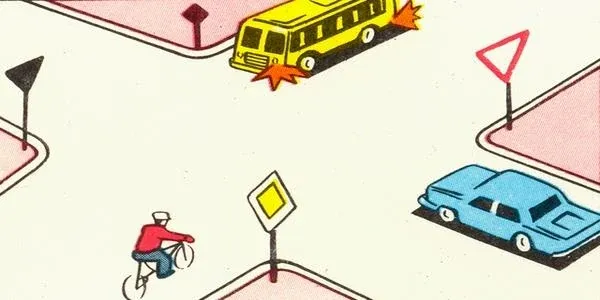
- The passenger car, the bus, the bicycle.
- The bus, the bicycle, the passenger car.
- The bus, the passenger car, the bicycle.
- The bicycle, the bus, the passenger car.
Show answer
Correct: 4. The bicycle, the bus, the passenger car.
The cyclist and the bus are on the main road: the cyclist faces sign 2.1 “Main road” and the dark diamond beside the bus is the back of the same sign, while the blue car faces sign 2.4 “Give way” and under point 96 of the Traffic Rules lets all main-road traffic pass, crossing last. The bus’s left indicator is on and the oncoming cyclist rides straight ahead, so under point 99 the bus, turning left, yields to the bicycle and crosses second. Hence the order is bicycle, bus, passenger car; the other options are wrong because they put either the yielding car ahead of main-road traffic or the left-turning bus ahead of the oncoming bicycle.
Question 337. The vehicles will pass the intersection in the following order:
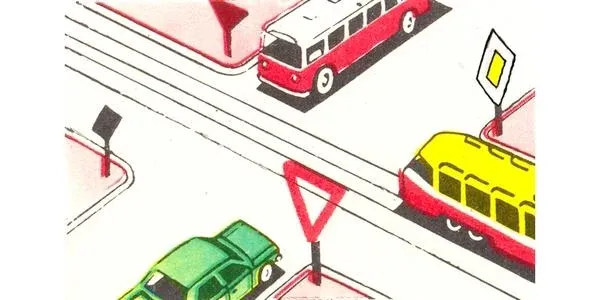
- The tram, the car and the bus simultaneously.
- The tram, the bus, the car.
- The bus, the tram, the car.
Show answer
Correct: 1. The tram, the car and the bus simultaneously.
Sign 2.1 “Main road” marks the tram’s road, while the green car and the bus see sign 2.4 “Give way” on the secondary road. Under point 98 the tram has priority at the intersection, and under point 96 those on the secondary road give way to traffic on the main one, so the tram goes first. The bus and the car are both on the secondary road and their paths do not cross, so they then pass at the same time. The order is therefore the tram, then the car and the bus together. “The tram, the bus, the car.” and “The bus, the tram, the car.” are wrong because the bus and the car go together after the tram, and the tram does not let the bus through ahead of it.
Question 342. Indicate the order of passing the intersection:
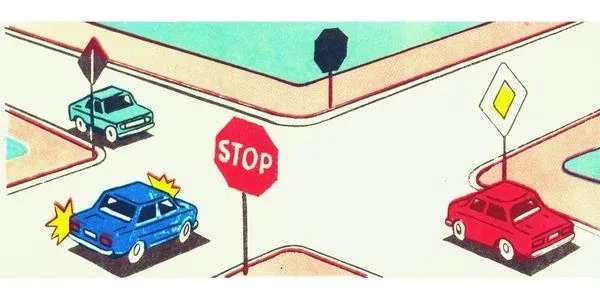
- The blue one, the red one simultaneously with the green one.
- The red one, the blue one, the green one.
- The red one simultaneously with the green one, the blue one.
Show answer
Correct: 3. The red one simultaneously with the green one, the blue one.
The blue car faces sign 2.5 “Movement without stopping prohibited”, so it must stop and give way to the traffic on the crossing road, and it therefore goes last. The red car is on the main road, marked by sign 2.1. The red and green cars both cross the intersection straight ahead on paths that do not intersect, so they pass at the same time, ahead of the blue one. The order is therefore the red one simultaneously with the green one, then the blue one. The other options are wrong because a car facing sign 2.5 cannot pass first or second.
Question 344. The last to pass the intersection will be:
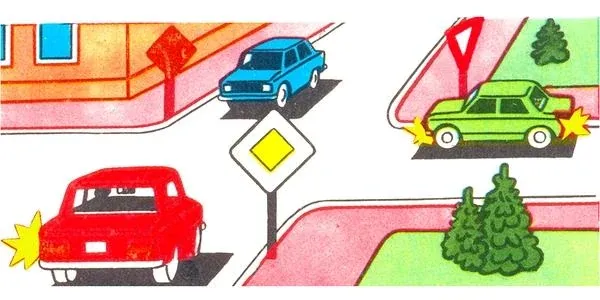
- The red car.
- The blue car.
- The green car.
Show answer
Correct: 3. The green car.
The green car faces sign 2.4 “Give way”, so it is on the secondary road, while the red car (and the blue car) are on the main road marked by sign 2.1. Under point 96 of the Rules, a driver on the secondary road must give way to all vehicles on the main road, whatever their direction. The green car therefore passes the intersection last. “The red car” and “The blue car” are wrong, because those cars are on the main road and have priority over the green one.
Question 346. The cars will pass the intersection in the following order:
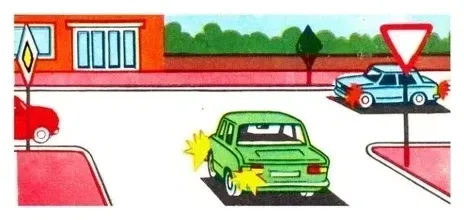
- The blue one, the green one, the red one.
- The red one, the blue one, the green one.
- The green one, the red one, the blue one.
Show answer
Correct: 2. The red one, the blue one, the green one.
The sign on the left is 2.1 “Main road”, establishing that the road of the red and blue cars is the main one; the sign on the right is 2.4 “Give way”, establishing that the road of the green car is secondary. Under point 96 of the Rules: “At an intersection of unequal roads, the driver of a vehicle approaching on the secondary road is obliged to give way to vehicles travelling on the main road, whatever their further direction of travel” — so the green car passes last. Of the two cars on the main road, the red one travels straight ahead and the blue one turns left; under point 99, “When turning left or making a U-turn, the driver of a non-rail vehicle must give way to the drivers of vehicles travelling on an equal road from the opposite direction straight ahead or to the right” — so the blue car must give way to the red one and passes after it. Hence the order is “the red one, the blue one, the green one”. “The blue one, the green one, the red one” is wrong, because the red car has priority over the left-turning blue car under point 99 and the green car gives way to both main-road cars under point 96; “the green one, the red one, the blue one” is wrong, because the green car on the secondary road gives way to both the red and the blue car under point 96 and cannot pass first.
Question 362. The vehicles will pass the intersection in the following order:
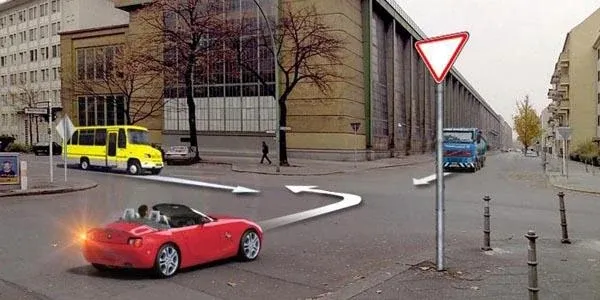
- The light passenger car, the bus, the lorry.
- The bus, the lorry, the light passenger car.
- The bus, the light passenger car, the lorry.
Show answer
Correct: 2. The bus, the lorry, the light passenger car.
Sign 2.4 “Give way” stands on the red car’s road, and on the bus’s road the reverse side of sign 2.1 “Main road” is visible, so the crossing road is the main one: the bus goes first, and under point 96 of the Rules those travelling on the secondary road go only after it. The red car and the lorry are both on the secondary road and, under point 97, are governed between themselves by the rules for roads of equal importance; when turning left, the red car is obliged by point 99 to give way to the oncoming lorry going straight. The order is therefore the bus, the lorry, the light passenger car. “The light passenger car, the bus, the lorry.” is wrong, because a vehicle on the secondary road cannot go ahead of the bus travelling on the main road, and “The bus, the light passenger car, the lorry.” is wrong, because when turning left the oncoming lorry must be let through (point 99).
Question 369. In this situation, when making a U-turn it is necessary to give way to
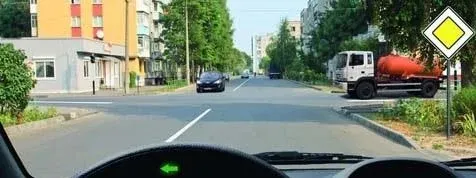
- The passenger car
- Both drivers
Show answer
Correct: 1. The passenger car
Sign 2.1 “Main road” stands on the right, so you are travelling on the main road and making a U-turn on it. Under point 99 of the Traffic Rules a driver making a U-turn must give way to vehicles coming from the opposite direction and travelling straight ahead, so you must give way to the light passenger car coming straight at you - being on the main road does not excuse that. The tanker truck is on the secondary road crossing from the right and, under point 96, is itself obliged to give way to traffic on the main road, so “Both drivers” is wrong.
Question 377. When crossing the intersection in this situation
- We have the right to go first
- We must give way to the tram driver
- We must give way to the truck driver
- We must give way to all drivers
Show answer
Correct: 1. We have the right to go first
Sign 2.1 “Main road” stands at your approach, and with the traffic light showing flashing yellow the intersection counts as unregulated (point 95), so it is settled by the priority signs. The truck and the tram are on the crossing secondary road, so under point 96 they must give way to a vehicle travelling on the main road. A tram’s advantage over non-rail vehicles applies only at an intersection of roads of EQUAL importance (points 98 and 100), so here the tram must yield as well. The right to go first is therefore yours, and the options giving way to the tram, to the truck or to everyone are wrong, because priority belongs to the traffic on the main road.
Question 384. In the case of making a left turn at the second crossing, the driver
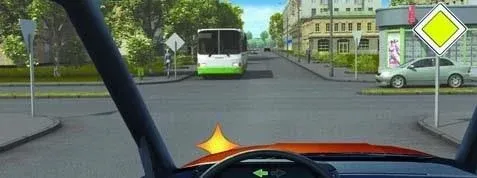
- Has priority
- Must give way to the other drivers
- Must give way to the bus driver
Show answer
Correct: 3. Must give way to the bus driver
Sign 2.1 “Main road” stands on the right, and you are turning left towards the second crossing. Under point 99 of the Rules a driver turning left must give way to vehicles coming from the opposite direction that are travelling straight ahead or turning right, and in the picture the bus is coming straight at you from the opposite direction - its windscreen and front are what you see. You must therefore give way to the bus driver. “Has priority” is wrong because it is the left-turner who yields to oncoming traffic, and “Must give way to the other drivers” is wrong because the light passenger car on the right does not cross the path of your left turn.
Question 397. In this situation, when is it permitted to make the right turn
- Immediately
- In case of not obstructing the truck — simultaneously with its passage
- After the truck has passed
Show answer
Correct: 2. In case of not obstructing the truck — simultaneously with its passage
Sign 2.4 “Give way” faces you, so you must give way to vehicles travelling on the crossing road, and sign 5.7.1 shows that the exit is onto a one-way road running to the right. The truck is travelling in the LEFT lane of that road, while your right turn brings you into the right-hand edge lane, so the turn is permitted at the same time as the truck passes, provided you create no obstruction for it - giving way means not forcing another driver to change speed or direction (sub-point 3 of point 3). “Immediately” is wrong because obstructing the truck on the crossing road is prohibited, and “After the truck has passed” is stricter than the Rules require: where you obstruct nobody you may go at the same time.
Question 402. When the driver cannot determine the presence of a road surface (dark time of day, mud, snow, etc.), and priority signs are absent, then
- He must consider that he is on a secondary road
- He must be guided by the rules for crossing an intersection of equal roads.
Show answer
Correct: 1. He must consider that he is on a secondary road
Under point 101 of the Rules, when the driver cannot determine the presence of a road surface (dark time of day, mud, snow, etc.) and priority signs are absent, “He must consider that he is on a secondary road”. That cautious assumption obliges him to give way to those travelling on the crossing road. The option “He must be guided by the rules for crossing an intersection of equal roads.” is wrong, because point 101 requires him to treat his own road as secondary, not as equal.
Question 410. At this intersection, to give way to the truck approaching from the road without a surface we
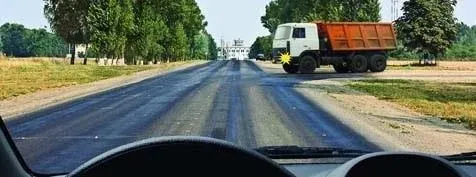
- Are obliged, since it has approached us from the right side
- Are not obliged, since a road with a hard surface is the main one with respect to one without a surface
Show answer
Correct: 2. Are not obliged, since a road with a hard surface is the main one with respect to one without a surface
Under the definition of a main road in point 3 of the Rules, a road with a hard surface - asphalt concrete, cement concrete and the like - is the main one in relation to an earth road without a surface. You are on the surfaced road, so it is the main one, and the truck coming from the road without a surface must give way to you: you are not obliged to yield. “Are obliged, since it has approached us from the right side” is wrong because the give-way-to-the-right rule operates only at an intersection of roads of EQUAL importance, and a surfaced road is not equal to an earth one.
Question 422. When making a left turn you must give way to
- The truck driver
- Both drivers
- No one
Show answer
Correct: 1. The truck driver
Sign 2.1 “Main road” is in place, so you are on the main road, and the arrow on the dashboard shows a left turn. The truck is coming from the opposite direction along that same main road, and under the Rules a driver turning left must give way to vehicles coming from the opposite direction travelling straight ahead or turning right - so you must give way to the truck driver. The passenger car on the right is on a secondary road and must give way to you, which is why “Both drivers” is wrong, and “No one” ignores the advantage oncoming traffic has over a left turn.
Question 425. In this situation a right turn is permitted
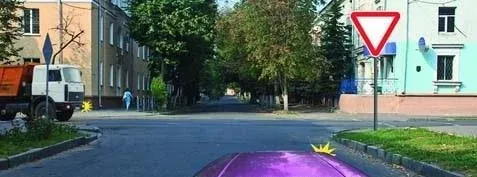
- Only after the truck
- Simultaneously with the truck, if that will not obstruct the truck driver
Show answer
Correct: 2. Simultaneously with the truck, if that will not obstruct the truck driver
Sign 2.4 “Give way” faces you, so under point 96 of the Rules you must give way to the vehicles travelling on the main road. But the Rules define giving way as not creating an obstruction - not forcing the driver who has priority to change his speed or direction - and not as necessarily coming to a halt. The right turn is therefore permitted at the same time as the truck, provided it does not obstruct its driver. “Only after the truck” is wrong because yielding does not require waiting for it to pass completely.
Question 427. In this situation it is necessary to give way to
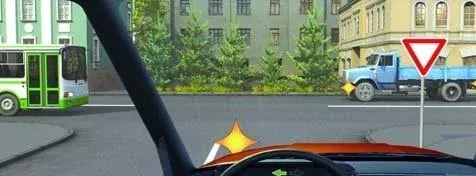
- The bus driver
- The truck driver
- Both drivers
Show answer
Correct: 3. Both drivers
Sign 2.4 “Give way” faces you, so you are on the secondary road. Under point 96 of the Traffic Rules a driver approaching an intersection on a secondary road must give way to the vehicles travelling on the main road, whatever direction they then take. The bus is approaching from the left and the truck from the right, and both are on the main road, so you must give way to both drivers. Naming only the bus driver or only the truck driver is wrong, because point 96 requires yielding to every vehicle on the main road.
Question 730. You are continuing straight ahead; to which vehicle must you give way?
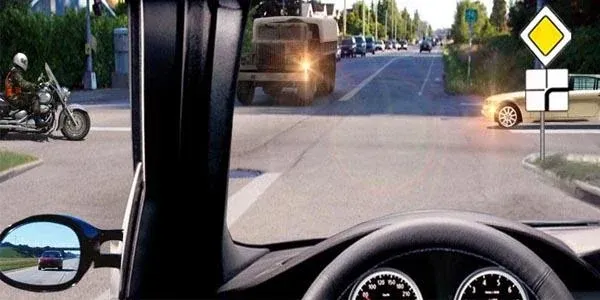
- Only to the passenger car.
- To none.
- Only to the passenger car and the motorcycle.
- To all vehicles.
Show answer
Correct: 1. Only to the passenger car.
Under point 97 of the Traffic Rules, where the main road changes direction at an intersection - the plate under the main-road sign shows it turning to the right - the drivers travelling on it treat each other by the rules for an intersection of roads of EQUAL importance. The light passenger car is on the main road too and approaches from your right, so under point 98 you must give way to it. The motorcycle approaching from the left and the oncoming truck are on secondary roads and under point 96 must give way to you, so only the passenger car has priority over you here.
Question 732. If you intend to make a U-turn at the intersection, to which vehicle must you give way?
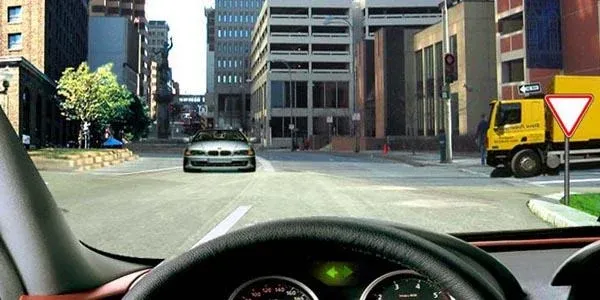
- To the passenger car.
- To all vehicles.
- To the truck.
Show answer
Correct: 2. To all vehicles.
From the driver’s position the “Give way” sign - the inverted triangle - is visible on the right, so you are approaching the intersection on the secondary road. Under point 96 of the Traffic Rules a driver approaching an intersection of unequal roads on the secondary one must give way to the vehicles travelling on the main road, whatever direction they then take. On top of that, point 99 obliges a driver making a U-turn to give way to oncoming vehicles. Before beginning the U-turn you must therefore give way to all the vehicles.
Question 760. The driver of the passenger car
- Must give way
- Has priority, since he approached from the right side
Show answer
Correct: 1. Must give way
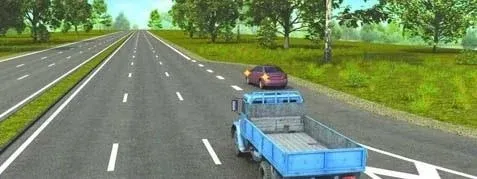
The light passenger car is coming out onto the road from an earth track, and under the Rules’ definition of a main road, a road with a hard surface is the main one in relation to a road with an earth surface. Under point 96 of the Traffic Rules a driver approaching an intersection on the secondary road must give way to the vehicles travelling on the main road, whatever direction they then take. The give-way-to-the-right rule of point 98 does not operate here, because the roads are NOT of equal importance, so the passenger car’s driver must give way to the truck even though he is approaching from the right.
Question 869. On an unsurfaced dirt road, does the presence of a surfaced section immediately before the intersection make that road equivalent to the road it crosses?
- No.
- Yes.
Show answer
Correct: 1. No.
Point 3(1) of the Traffic Rules, in its definition of “main road”, states directly that on an unsurfaced dirt road the presence of a surfaced section immediately before the intersection does not make that road equivalent to the surfaced road it crosses. The correct answer is therefore “No.” — such a dirt road stays secondary, and a driver travelling along it must give way. “Yes.” contradicts the closing sentence of that same definition outright.